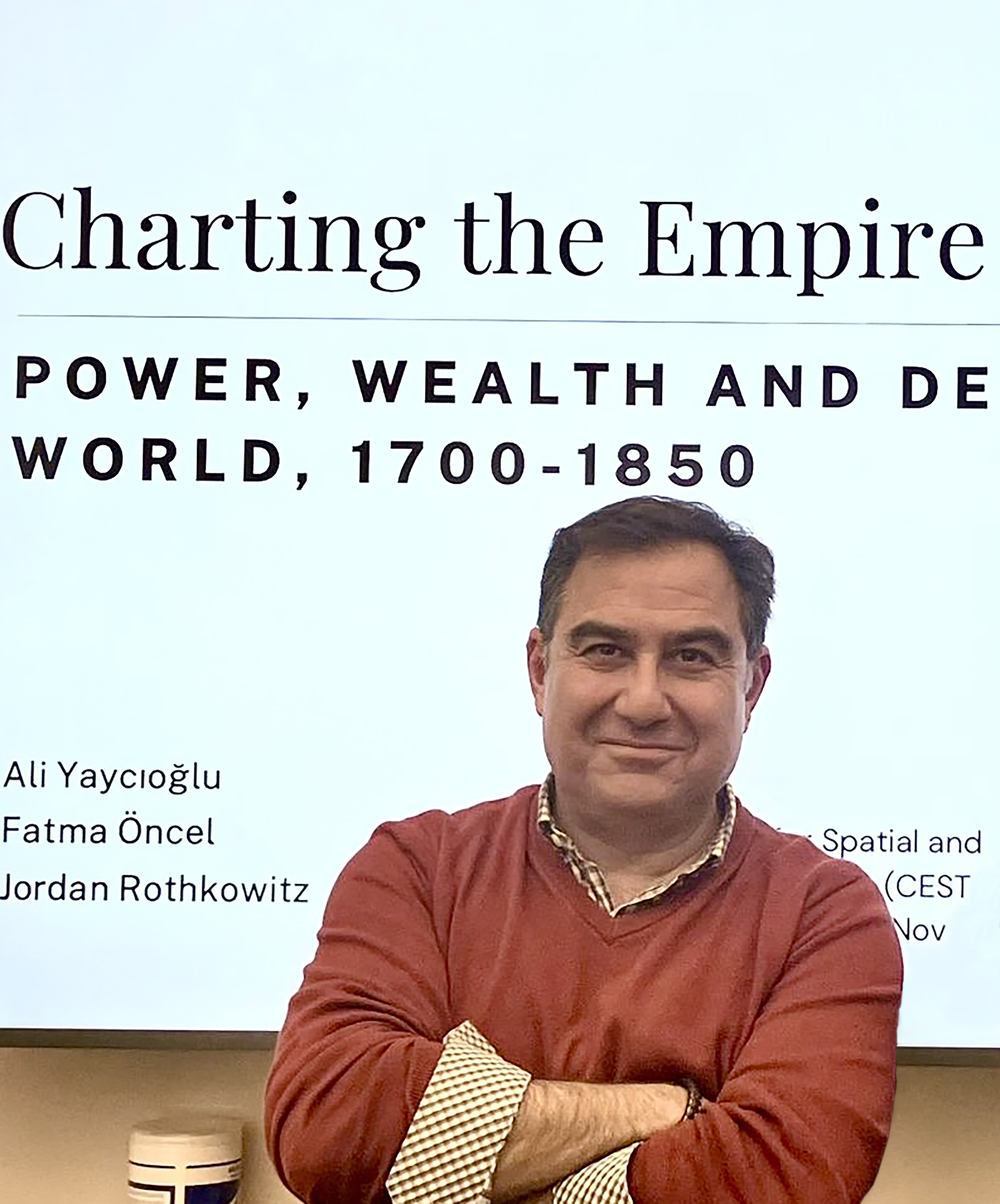
Ali Yaycıoğlu
Project Director
Dr. Ali Yaycıoğlu is a historian specializing in the Ottoman Empire and Modern Turkey. His research examines various dimensions of political, economic, and legal institutions and practices, as well as the social and cultural dynamics of the Ottoman world and Turkey, from the sixteenth century to the present. He is also interested in using digital tools to understand, visualize, and conceptualize historical developments. Dr. Yaycıoğlu teaches courses on the Ottoman Empire and Modern Turkey; Empires, Markets & Networks in the Early Modern World; the Age of Revolutions; Histories of Democracy and Capitalism; and Digital Humanities. Dr. Yaycıoğlu's first book, Partners of the Empire: Crisis of the Ottoman Order in the Age of Revolutions (Stanford, 2016), offers a radical rethinking of the Ottoman Empire in the eighteenth and early nineteenth centuries in the global context of the age of revolutions. Over this unstable period, the Ottoman Empire faced political crises, institutional shakeups, and popular insurrections. This book takes a holistic look at the era, interested not simply in central reforms or in regional developments, but in their interactions. Drawing on original archival sources, Ali Yaycioglu uncovers the patterns of political action—the making and unmaking of coalitions, forms of building and losing power, and expressions of public opinion. Ali Yaycıoğlu is currently working on two book projects. The first, titled The Order of Debt: Power, Wealth, and Death in the Ottoman Empire, investigates the relationship between property, capital, finance, and Ottoman statehood during the eighteenth and nineteenth centuries. This project is supported by a digital initiative called Charting the Empire, based at the Center for Spatial and Textual Analysis (CESTA). Through this initiative, he examines political and financial actors, the accumulation of capital and power, debts, networks of liabilities, and state order in the Ottoman Empire from 1750 to 1850, drawing on Ottoman fiscal documents and codices that employ unique accounting techniques. His second book, tentatively titled State, Religion, and People: The Ottoman Empire as a Political Community, focuses on collective actors, popular movements and public quarrels exploring the potential of a people-centric alternative narrative of the Ottoman Empire.